
With shampoo, we tend to add “just a little more”. With a hair mask, maybe another scoop just in case. And with serum or oil… well, a few extra drops can’t hurt, right?
Actually, when it comes to how much hair product to use, more doesn’t necessarily mean better. The right amount depends on the product itself, but also on your hair length, density, thickness and texture.
The most important thing to remember: start with a small amount, distribute it properly and only add more if your hair really needs it. How you distribute a product can matter just as much as how much you use.
Is there a perfect amount of hair product for everyone?
No. Two people with hair of exactly the same length may need very different amounts of product.
Fine, low-density hair can become weighed down quite easily by certain leave-in products, while thick, dense or curly hair may need a little more to achieve an even application.
The American Academy of Dermatology also recommends starting with a small amount of leave-in conditioner and adjusting it according to hair thickness and individual needs.
Before thinking about quantity, look at your hair
Density. The more hair you have, the more surface area there is to cover.
Thickness. Fine hair usually needs more controlled amounts than thick hair.
Length. This matters especially with products applied through the mid-lengths and ends.
Texture. Waves and curls may benefit from a more careful, section-by-section application.
Hair condition. Dry, sensitised or porous hair may need a different routine from fine hair with little damage.
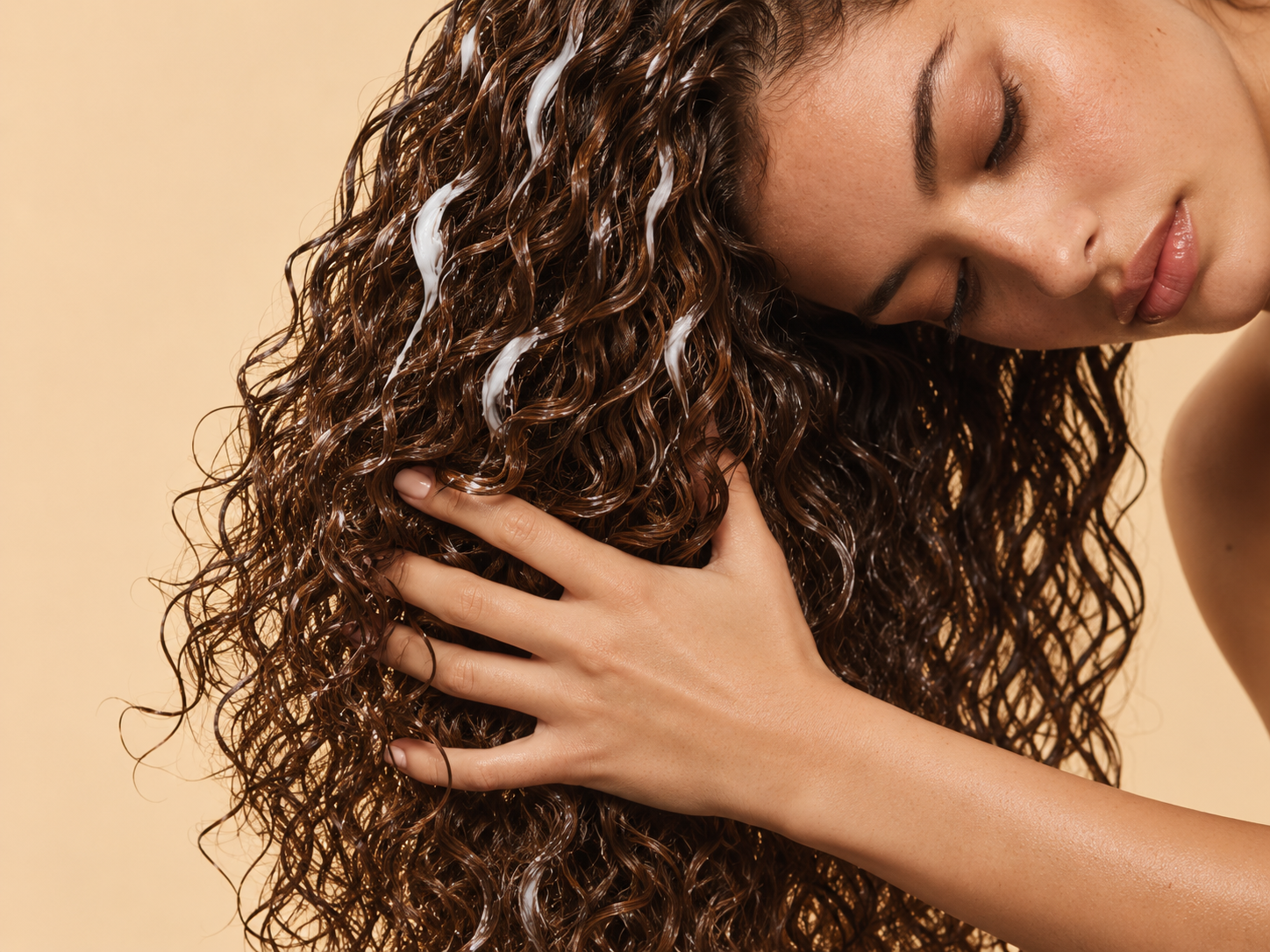
Shampoo: focus on the scalp
Having long hair doesn’t automatically mean you need twice as much shampoo. Shampoo is mainly designed to cleanse the scalp, so that’s where you should focus the application.
Start with a moderate amount, work it between your hands and massage it gently into the scalp. If you have very dense hair, distributing the shampoo across several areas can be more effective than applying a large amount in one place.
For example, Calm.On Shampoo is applied to damp hair and gently massaged until an even emulsion forms before rinsing. Its directions also allow the wash to be repeated when deeper cleansing is needed, rather than suggesting a large amount in a single application.
Conditioner: work in sections
Length and density start to matter more with conditioner, because the product needs to be distributed along the hair fibre rather than concentrated mainly on the scalp.
A good approach is to start with a small amount and work in sections. Softness.On, for example, is applied evenly from mid-lengths to ends in sections. This makes it easier to cover the hair properly before deciding whether you genuinely need more product.
A small tip: if you always end up adding more conditioner because some areas feel as though they have no product, try sectioning your hair first. Sometimes you don’t need more product — you just need to distribute it better.
Hair mask: length and density matter
With a hair mask, there isn’t much sense in setting one universal amount. Short, fine hair and long, dense hair simply don’t have the same surface area to cover.
The goal is to use enough product to coat the areas you want to treat without leaving an unnecessarily heavy layer on the hair.
With Glow.Remedy Mask, for example, the product is applied to damp hair from mid-lengths to ends. Start with a moderate amount, massage it through and distribute it thoroughly before adding more, especially if your hair is fine or medium-density.
Leave-in products: start with less
Leave-in products stay on the hair, so using too much can be much more noticeable than with a product that will later be rinsed away.
If you have fine hair, be particularly careful and start slowly. If your hair is dense, thick or curly, you can add a little more section by section until the product is distributed evenly.
Boomerang.Zero Leave In, designed for curly and wavy hair, is applied from mid-lengths to ends and worked through the strands. Applying it section by section gives you much more control over how much product each area receives without unnecessarily weighing down the whole head of hair.
Hair oils: a few drops can make a big difference
Hair oils are one of the easiest products to overapply. They tend to spread easily, so starting with a very small amount is usually the best approach.
For Oil.Zero, Greensoho recommends applying three drops to the palm of the hand before working the product through the hair. It’s a good example of why you don’t need to fill your palm to get an effective application.
But “less is more” isn’t always the rule
Using less product shouldn’t become another rigid rule either. Some formulas are designed to thoroughly coat the hair and their application instructions reflect that.
Miracle.On, for example, is applied generously to damp hair in sections and distributed with a brush before being activated with hot air. That’s why the specific directions for each formula should always come before a general “use less” rule.
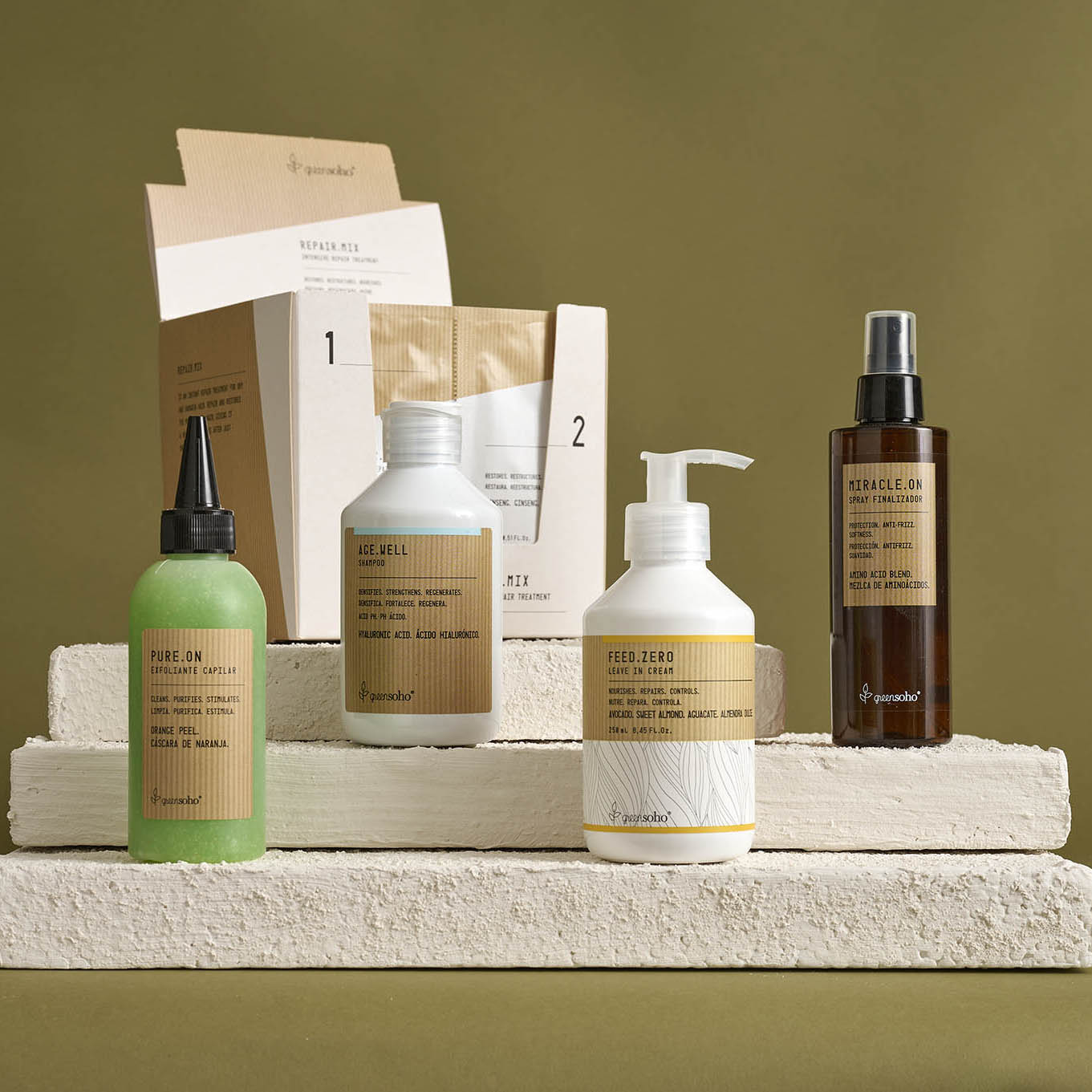
How can you tell if you’re using too much product?
Your hair can give you a few clues. These aren’t a diagnosis, and they don’t necessarily mean the product itself is wrong for you, but they can be useful signs that it’s worth reviewing how much you’re applying.
- Your hair loses movement after applying leave-in products.
- Your roots feel heavy soon after washing.
- Your curls lose volume or definition because they feel weighed down.
- Your hair looks or feels greasy after applying oils or serums.
- You notice residue or a coated feeling even though you’ve only just finished your routine.
A simple way to find the right amount for your hair
- Check the directions first. Not every hair product is designed to be applied in the same way.
- Start with the smallest amount you can distribute properly.
- Work in sections if you have long or dense hair.
- Distribute before adding more. Depending on the product, use your hands, a comb, brush or gentle massage to spread it evenly.
- Pay attention to the result. You can slightly adjust the amount the next time you use it.
Ultimately, the right amount isn’t an exact measurement you need to memorise. It’s the amount that lets you distribute the product properly and achieve the result you want without using more than your hair needs.
Common questions about how much hair product to use
How much shampoo should I use if I have long hair?
Length isn’t the main factor when it comes to shampoo because the application should focus primarily on the scalp. Density often matters more. Start with a moderate amount, massage it in thoroughly and only add more if you can’t distribute it across the whole scalp.
Does using more hair mask give better results?
Not necessarily. A hair mask should adequately cover the areas you want to treat, but adding more once the hair is already coated doesn’t automatically improve the result. Working in sections can help you achieve more even coverage while keeping the amount of product under control.
Does curly hair need more product?
It may need more if it is also thick or dense, but the curl pattern alone doesn’t determine how much product you should use. Applying leave-in or styling products section by section makes it easier to see where a little extra product is genuinely needed.
How much hair oil should I use?
Hair oils usually work best in small amounts. Start with just a few drops, spread them between your palms and apply mainly through the mid-lengths and ends. You can then add a very small amount if certain areas still need it. Oil.Zero, for example, recommends three drops.
Is it better to use too little product than too much?
With concentrated or leave-in products, it’s often easier to start with a small amount and add more if needed. However, every formula has its own directions. Some products are designed for more generous coverage, so the manufacturer’s instructions should always be your starting point.
Your hair doesn’t need “a lot”. It needs the right amount.
Adjusting the amount, distributing each product properly and choosing formulas according to your hair’s needs can make more of a difference than simply adding another pump. Explore Greensoho hair care products to build a routine that works for your hair.